Novartis Adjuvant Melanoma Pathway
PROJECT: Healthcare app concept
ROLE: UX and Design
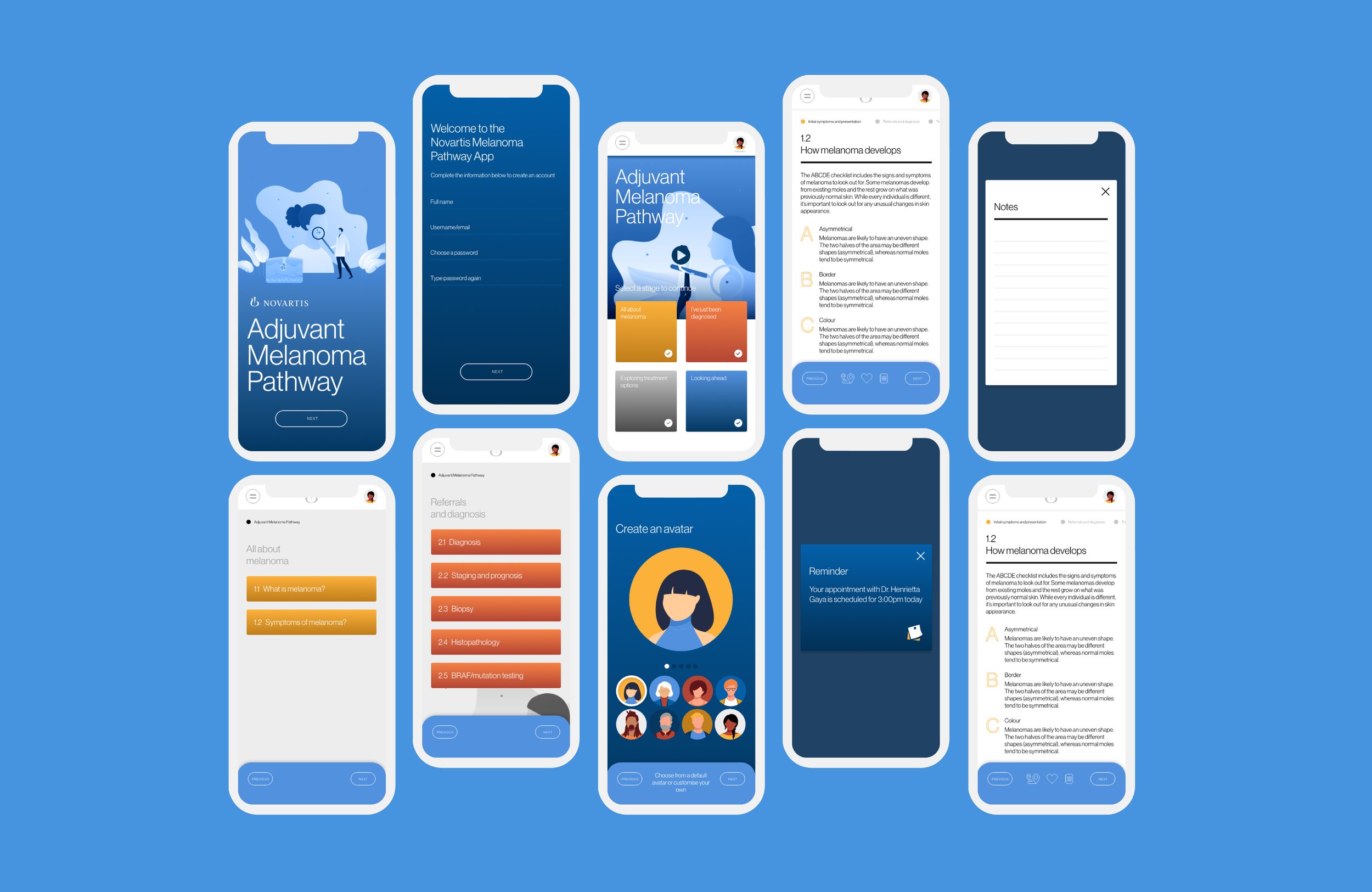
Our team was asked to conceptualise a digital product for newly diagnosed melanoma patients, in order to help them keep track of their treatment on the go.
The service needed to provide in-depth medical information throughout their treatment, but also offered a level of personalisation that was tailored to each individuals journey. This included avatar customisation, and the ability to track one’s journey through note-taking and saving important information along the four main stages of treatment.
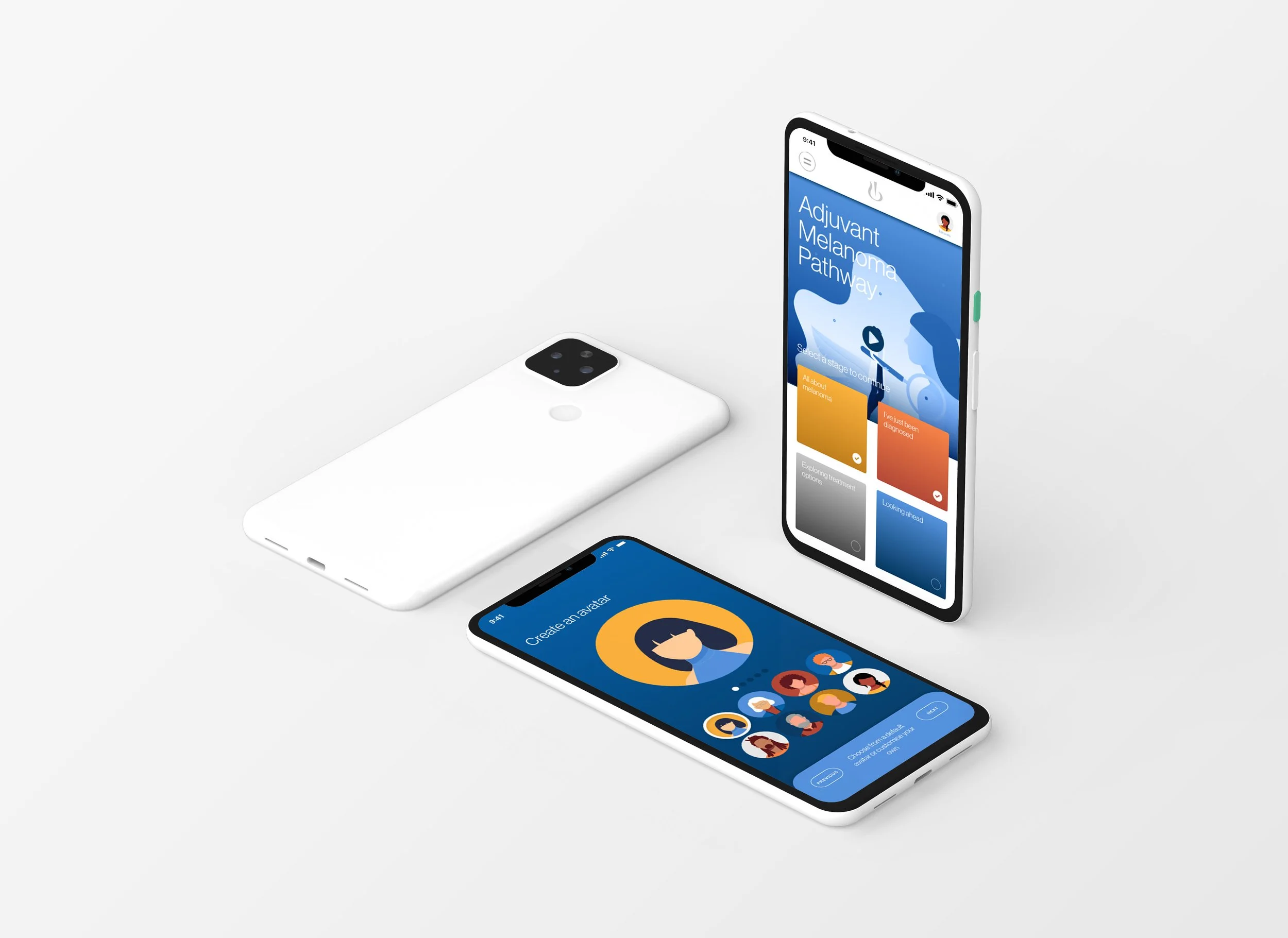
Working alongside a developer and a UX designer, I built on the wireframes they created to create both the protoype of the app, as well as the look and feel. I used existing Novartis colours and fonts, and presented the prototype to the client.
Using the wireframe as a foundation, I strived to elevate the app by suggesting the addition of the ‘notes’ functionality - allowing the user to jot down their thoughts, as well as a pathway tracker. I also recommended building in a ‘favourites’ function so the user could return to sections as they wished, and a reminder push notification that would link the user to appointments they had scheduled with medical practitioners.
My main intentions were to allow the user to jump about the app without losing their place along the journey, striving to offer an experience that was both seamlessly easy to use, and above all else, informative. This included several touch-points where they could return to the homepage, and get back on track, or view their journey from a wider perspective.
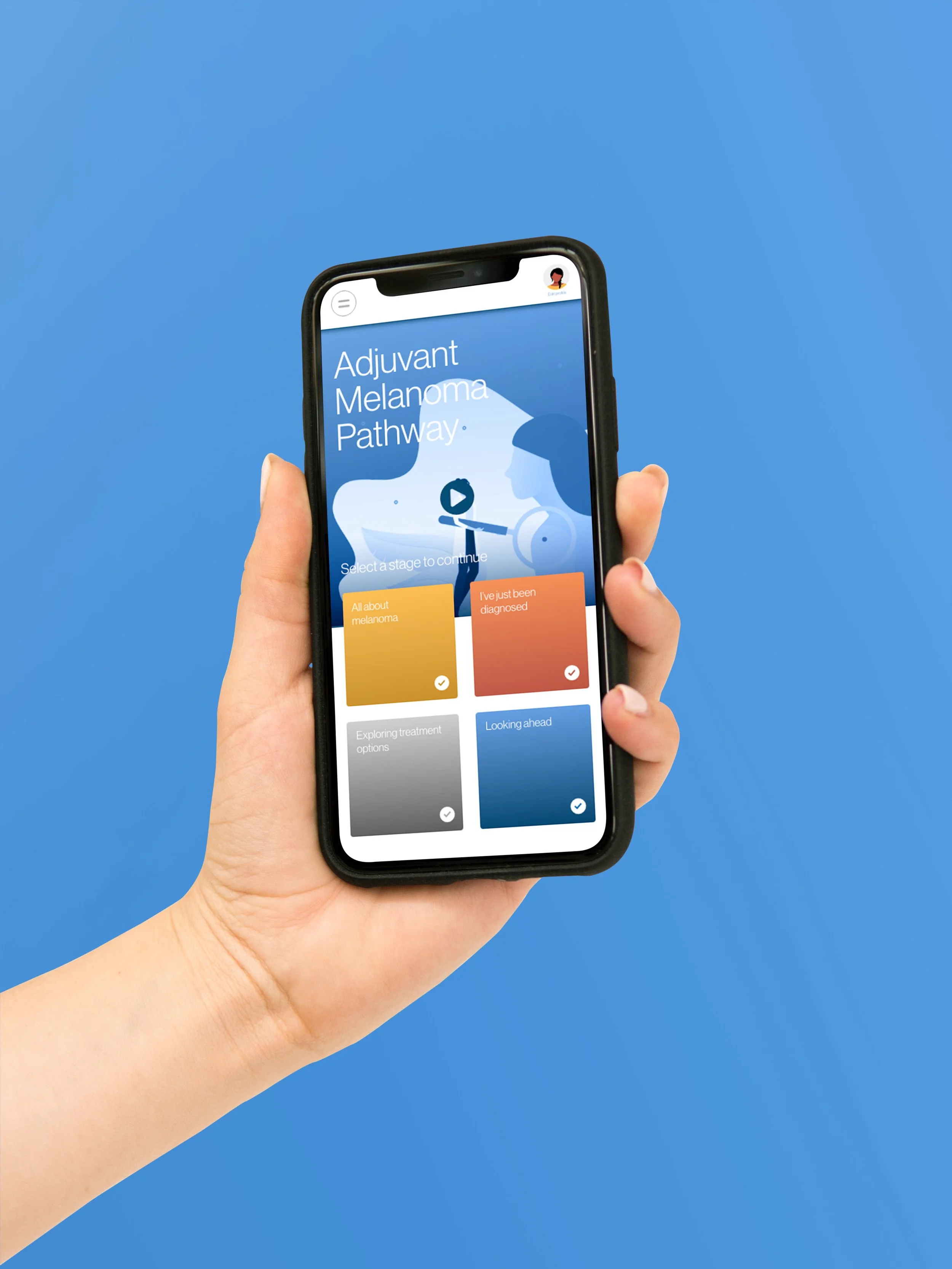
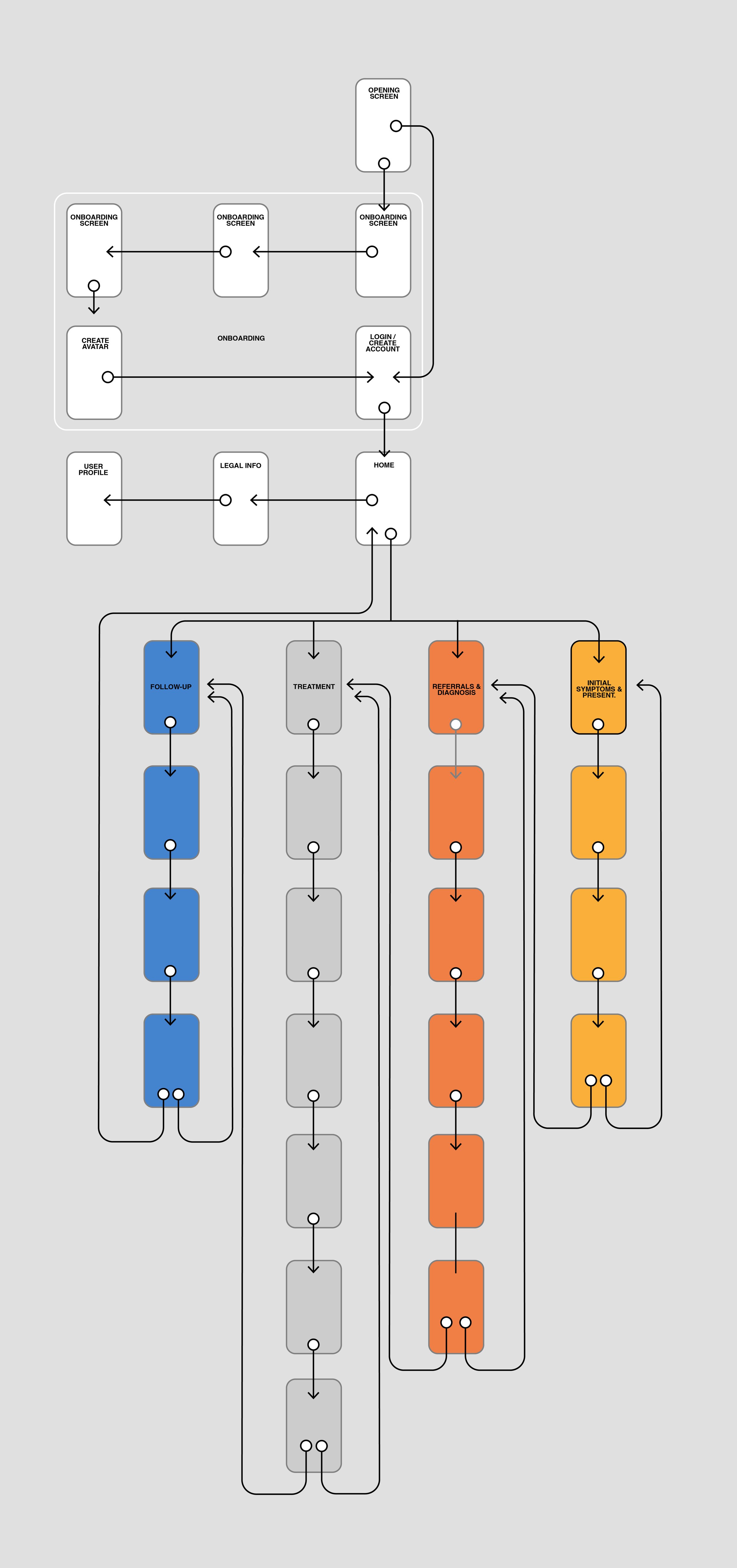
Whilst the essential goal was to help patients to understand next steps and the options available, we also wanted the user to feel empowered with knowledge and a sense of security throughout a commonly uncertain time.
With the addition of subtle animated illustrative elements layered behind buttons or as loading features, the traditional stylisation of medical information was softened and aimed to break up information into digestible segments, that may otherwise be difficult to process.
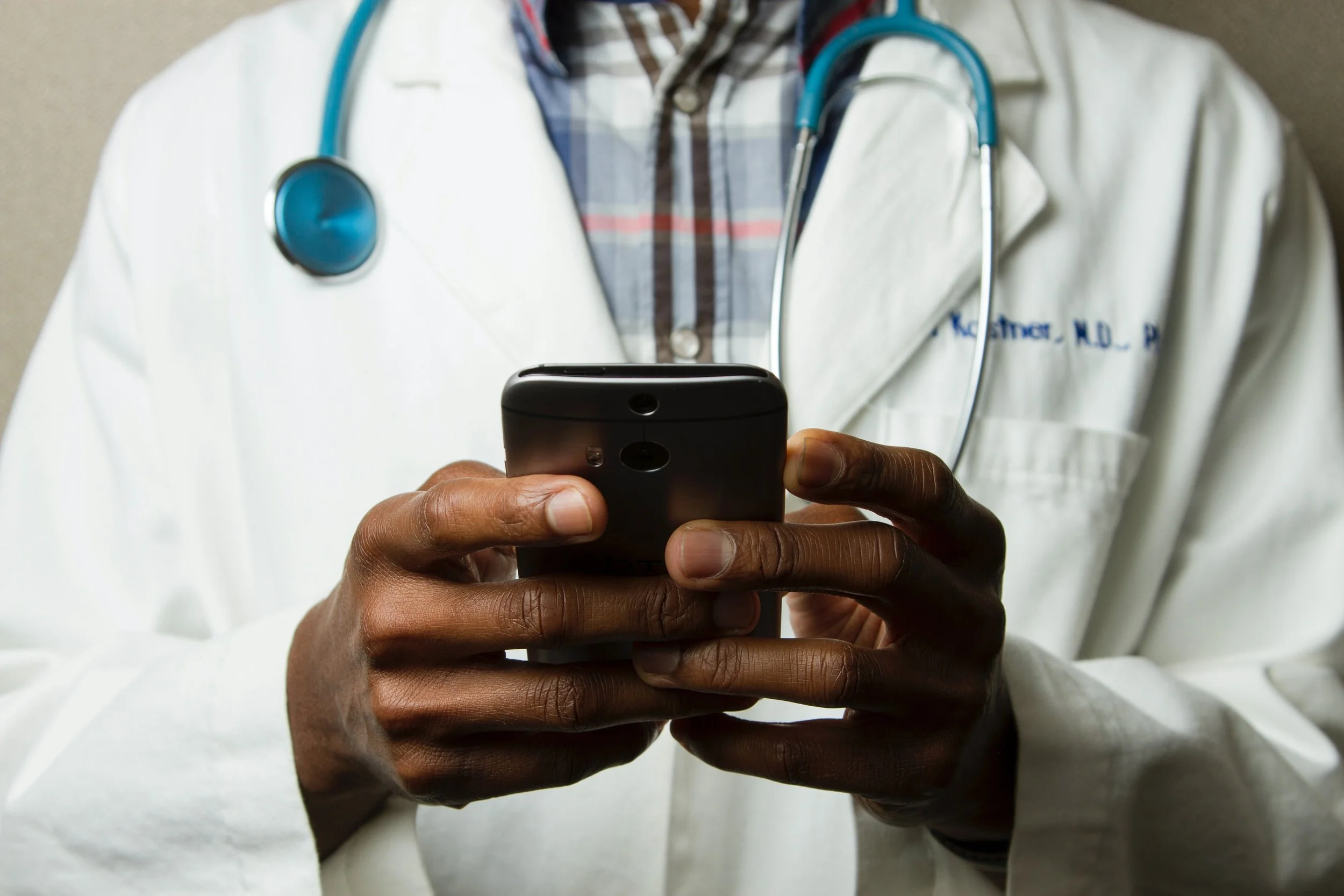
Finally, we aimed to assist in healthcare professional’s consultations with patients by creating a communicative bridge between parties.